Reading Casino Scenes in Fiction Through Space, Status and Chance
Read casino scenes in fiction through room details, table rituals and character choices to see how writers turn chance into dramatic pressure.
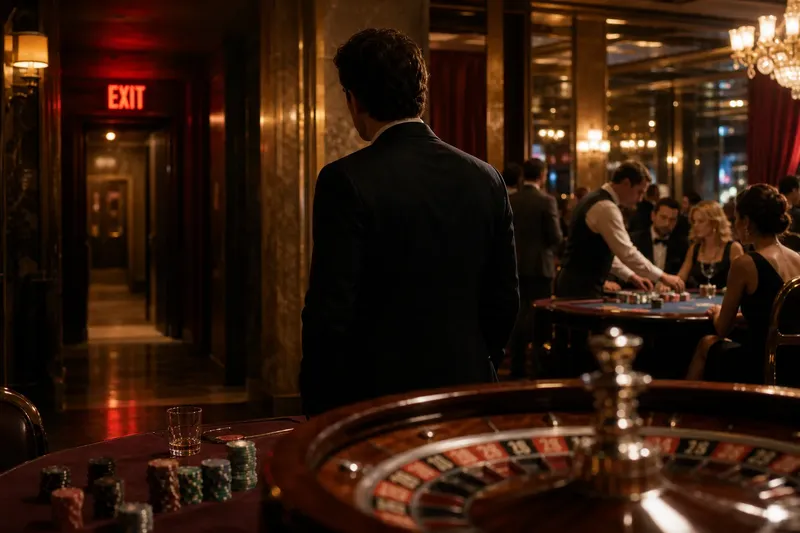
A character who watches the exit instead of the cards has already made the casino part of the story. In fiction, casino scenes use room details, table rituals and uncertain results to expose status, conceal motives and put pressure on what a character fears.
Casino scene craft
Start with what the scene makes consequential. A roulette wheel can create a pause; a dealer’s call can divide a crowd into winners and losers; a corridor can offer a character a route away. Each detail matters through the action or interpretation it prompts, not as proof of how a real casino operates.
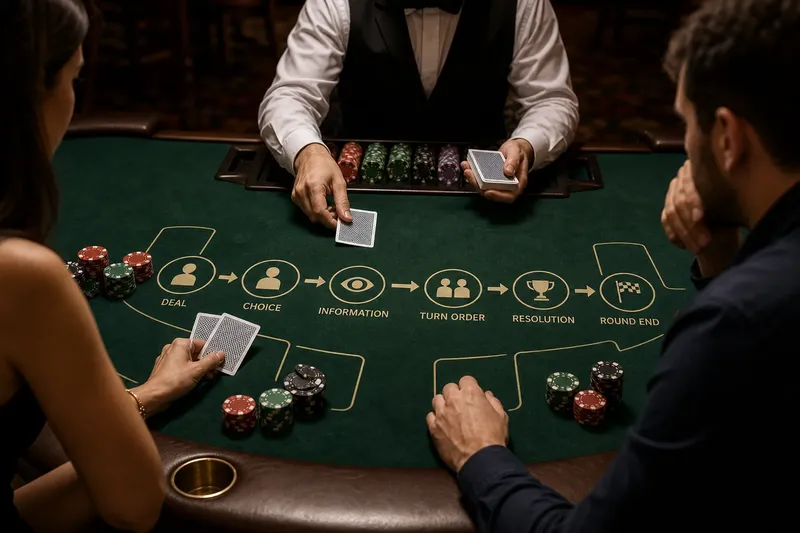
Writers often frame a game as public performance, a wager as a declaration or a result as an interruption to a strained relationship. Look for the detail that gives the convention force. A stack of chips might serve as a boast, a boundary or a reason someone refuses to leave.
Room and atmosphere
Sound, light and movement direct attention. A passage might set the clatter of chips against a hushed conversation, or keep a bright gaming floor in view while a character searches for a quiet doorway. The contrast can make the room feel exposed, seductive or difficult to escape.
Repeated details deserve a closer look. A clock, mirrored wall or particular table may return as the scene develops. Its recurrence can mark impatience, self-consciousness or an effort to impose order on an unpredictable moment.
Say a fictional character arrives after an argument, notices a red exit sign and keeps glancing at it while a game continues. The starting inputs are the argument, the sign and the character’s repeated looks. Each glance links the gaming room to the possibility of leaving; if the character eventually moves towards the door, read that action as an emerging choice, while continued attention without movement leaves the conflict unresolved.
Status at the table
A casino table can make social rank visible. Notice who speaks without interruption, who handles the chips comfortably, who waits for an invitation and who is treated as an audience. Small permissions can reveal more than expensive-looking surroundings.
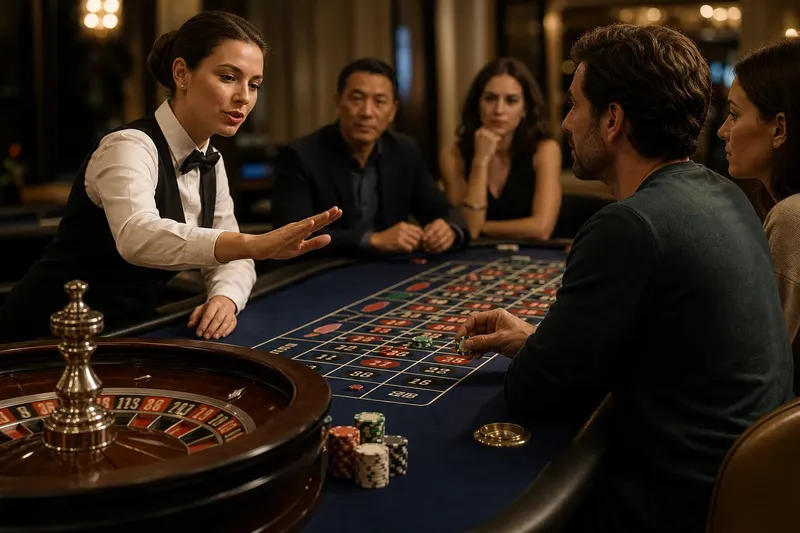
Table language adds another layer. A confident call, a careful silence or a misused term might signal familiarity, bravado or discomfort. Fictional dialogue is not a dependable account of real rules; its immediate purpose is to show how characters present themselves and judge one another.
In a scene of rivalry or seduction, ask whether the characters agree on what a gesture means. One person may offer a seat as a welcome while another reads it as a challenge. That mismatch can turn an ordinary exchange into a contest over belonging.
Point of view and chance
A viewpoint character does not see the whole casino. Someone afraid of recognition may attend to faces; someone hoping to leave may track the lift; someone fixated on winning may notice each result and ignore a companion’s expression. Selected details disclose priorities, including ones the character would rather not admit.
Chance creates pressure because the result is uncertain while the character’s interpretation may be firm. A loss can become humiliation, a win permission to continue, or a delay an omen. The tension lies in the meaning attached to the result, not in any suggestion that a game predicts what comes next.
For a close reading, note one detail the character watches, one they overlook and one the narration leaves unexplained. Then ask how those choices affect your trust in the character. If the game’s mechanics recede whenever a relationship comes into focus, the relationship may be the scene’s real contest.
Reading casino scenes clearly?
What makes a casino scene in fiction convincing?
Conviction comes from coherence: the sensory details, social behaviour and viewpoint should belong to the same scene. A stylised casino can feel persuasive if its details consistently shape what characters notice and do.
Can a casino scene explain real game rules?
Not reliably, since a writer may simplify or invent procedures for dramatic reasons. Treat the scene as fiction, and consult an independent source if you need to understand a real game.
How can I tell whether the room matters to the plot?
Look for a room detail that changes a character’s action or interpretation. If the exit, crowd or table affects a choice, the setting is part of the plot; if it only supplies mood, it is working chiefly as atmosphere.
Why do writers put chance under pressure?
An uncertain result can expose what a character wants or fears, while the people nearby make that private stake visible. The game creates a pause in which a relationship, ambition or self-image can shift.
Choose a reading lens
For atmosphere, follow recurring sounds, colours and routes through the room. For status, watch who is heard, welcomed or made to wait. For point of view, compare what the character notices with what the narration leaves out. When a scene combines all three, begin with the detail that changes the character’s next choice.
- If a sound recurs whenever tension rises, read it as a pressure cue; if it appears only once, consider whether it simply establishes the room.
- If one character controls the conversation, examine how that authority shapes the table’s social balance; if others interrupt freely, look for a more contested status.
- If two characters interpret a gesture differently, read the mismatch as a source of conflict; if they share its meaning, look for tension elsewhere.
- If the viewpoint lingers on a game result, ask what the character believes it will change; if attention shifts to a face or doorway, follow that human stake instead.
- If a recurring object connects the gaming floor to an exit, consider whether leaving is part of the character’s conflict; if no choice is attached to it, read it as setting detail.
- If the narration withholds a motive after showing a decisive action, keep your judgement of the character provisional; if the motive is stated plainly, focus on whether the action matches it.
Keep fictional effect distinct from real-world description. A casino scene may borrow familiar objects, but their arrangement belongs to the author’s design. Reading closely shows what the story invites you to infer without mistaking that invitation for a report on actual play; that distinction is the soundest guide when casino scenes in fiction blur dramatic convention and apparent realism.