Dealer Calls and Casino Table Language: What a Phrase Means
Learn how casino table language gains meaning from the game and its rules, so you can understand a dealer’s call without mistaking it for the full procedure.
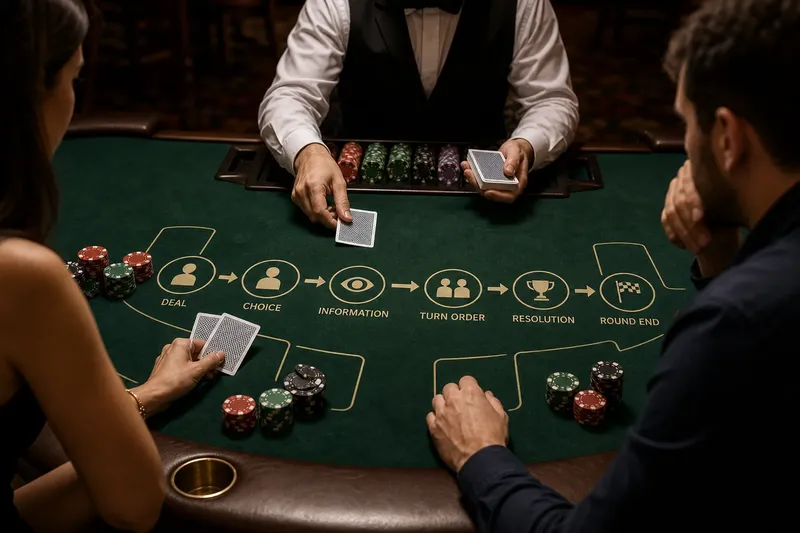
At a blackjack table, “stand” is a decision about a hand, while “no more bets” marks a change in the round. Casino table language is shaped by the game in front of you: the same short phrase can signal a procedure without explaining all of its terms.
Calls within a game
A dealer’s call belongs to the rhythm of a particular game. It may name a decision, mark a transition or direct attention to a result. Its brevity keeps play moving, but it does not necessarily explain what every player should do next.
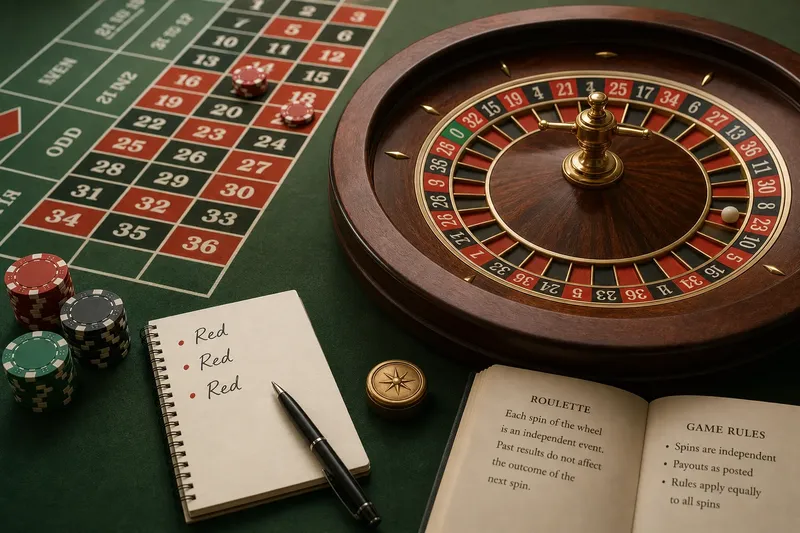
The game supplies the context. “Stand” has a specific role in blackjack; it does not describe a decision in roulette. “No more bets” signals that betting has closed, but the relevant table rules determine how that closure applies to the round.
Listen for the game and the action a phrase refers to, rather than treating a familiar expression as a complete rule.
Rules beyond the call
Printed table terms explain the procedures behind a game’s spoken cues. They may specify when wagers are accepted, how play proceeds and how a result is settled. A call can direct attention to one of those procedures without spelling it out.
That distinction matters when the same game has variants or a table uses a particular procedure. A phrase heard at one table may not carry the same scope at another. The printed terms for the game in front of you provide the relevant context.
How meaning changes
Table language works more like shorthand than a self-contained dictionary. The phrase, the game stage and the action under way combine to give a call its meaning. A gesture may help identify the subject, such as a hand or betting area, but it cannot supply conditions that the spoken words leave unstated.
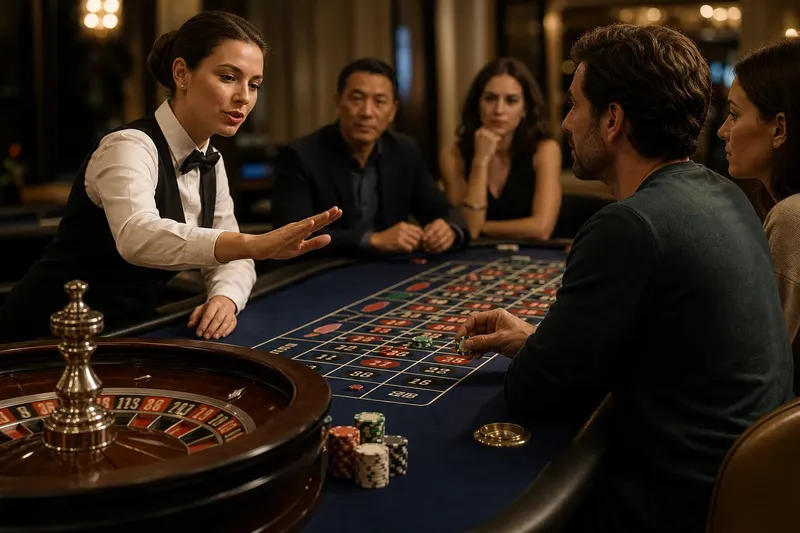
Imagine a roulette player hears “no more bets” while a chip remains near a betting area. The player’s starting point is one chip and uncertainty about whether it was accepted. They ask which wager the call covers and listen to the dealer’s explanation; if the chip’s status remains unsettled, they ask floor staff how the table’s printed terms apply. The resulting decision is whether that chip is treated as part of the round under the stated procedure, rather than inferred from another player’s actions.
Questions about table calls?
Does a dealer’s call replace the rules?
No. A call signals something relevant to the live round, while the table’s terms describe its procedures. If their meaning seems unclear, ask how the terms apply to the situation at hand.
Why can a familiar phrase mean something different?
Different games and variants give words distinct procedural roles. The phrase “stand”, for instance, names a blackjack decision, so its meaning should not be carried over to another game.
What if I missed the call?
Ask the dealer to repeat or explain the instruction before acting. A direct question about the current hand, wager or round is clearer than trying to reconstruct the words from the surrounding activity.
Can a gesture explain the whole procedure?
A gesture may show which hand or betting area a call concerns. If the instruction itself remains ambiguous, ask for the procedure in words.
Questions that clarify
Specific questions make it easier to connect a call with the action it concerns. Name the game and the point of uncertainty: ask whether a wager is accepted, which decision applies to a hand, or whether a result is being settled.
For example, instead of asking what “no more bets” means in general, ask which wagers the call covers in this round. That keeps the conversation focused on the table’s procedure, rather than on a phrase detached from its setting.