The Hot-Hand Story: Why a Run Does Not Rewrite the Rules
The hot-hand story can make casino streaks seem predictive. Learn how to separate a memorable run from the game’s mechanics before judging what comes next.
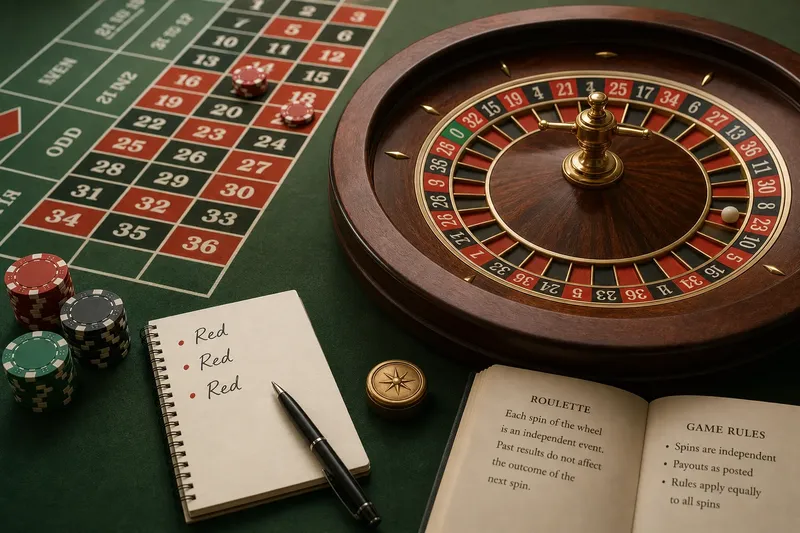
A run of red results can make the next roulette spin feel easier to call. The hot-hand story turns that feeling into a prediction, but a streak alone says nothing about whether the game’s underlying conditions have changed.
What a streak records
A sequence records what happened, in order. It does not automatically explain why it happened or forecast what follows. The distinction matters because a vivid run can invite a story about momentum or a result being due.
For an independent event, the model assumes that earlier outcomes do not affect the probability of the next one. In the usual roulette model, that means treating each spin as independent while the wheel, rules and operating conditions remain unchanged. This is a statement about the model, not a claim that every real-world mechanism is flawless.
Keep the observation and the explanation separate: “red appeared several times” is a record; “black is due” is an inference that needs support from the game’s mechanics.
When results depend
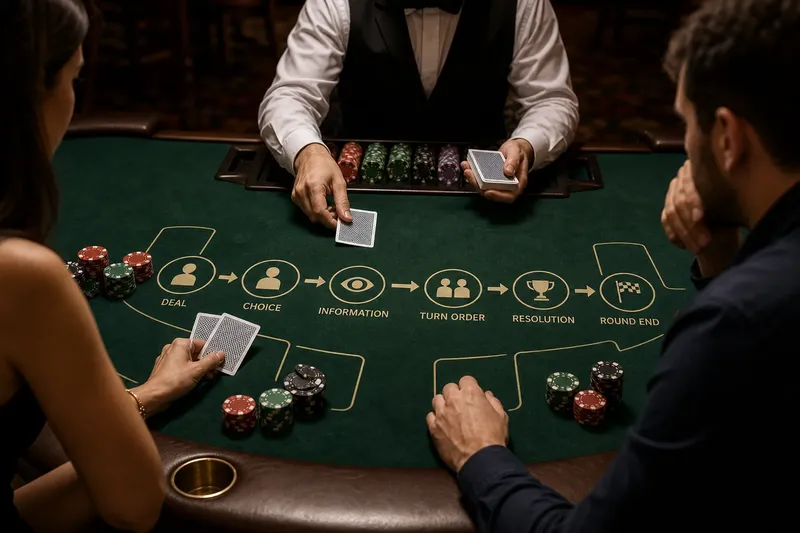
Not every chance event fits the independent-event model. In a card game, a card dealt from a shoe and not returned changes the cards left to be dealt. A reshuffle changes the conditions again. The effect of earlier outcomes therefore depends on the game’s rules and the state of what remains in play.
Other conditions can matter, too. A rule change, a different procedure or a suspected equipment problem raises a question about the mechanism, not merely about the shape of a streak. A run by itself cannot establish that something has changed.
Ask what the game retains from earlier turns before deciding whether its recent history is relevant.
Why runs persuade
A streak has a beginning and an apparent direction. That gives it a ready-made story: a winning table seems to have momentum, or a losing run seems to demand a reversal.
Memory adds weight. A striking sequence is easier to recall than an ordinary mix of outcomes, and a display of recent results keeps the sequence in view. Neither vividness nor repetition changes the mechanism that produces the next event.
There is also a difference between surprise after a sequence has happened and useful information available before the next event. A run may be memorable without being predictive.
Checking a streak
Use the game’s actual conditions to decide what the sequence can tell you. For each observation, make the next decision explicit:
- If the game is roulette and the rules and operating conditions appear unchanged, treat the result board as a record of earlier spins; if you are considering a prediction, do not use the streak alone, and instead rely on the game’s stated rules.
- If a card has been dealt and not returned to the shoe, check the rules and what remains available; if the composition has changed, account for that dependence rather than applying the roulette model.
- If the shoe has been reshuffled, confirm that the procedure is complete; if it is, assess the next hand under the newly established conditions rather than treating the old sequence as a continuing signal.
- If the rules or procedure appear to have changed, compare what you observe with the venue’s instructions; if the difference remains unclear, ask staff or stop relying on the sequence as evidence.
- If the equipment appears unusual, separate that concern from the streak itself; if you cannot clarify the operating conditions, avoid making a prediction from recent results and raise the concern with the venue.
- If a run prompts you to increase a wager, ask whether the game’s mechanics support the inference; if they do not, do not let the streak alone justify risking more.
- If a display lists only recent outcomes, read it as a limited record; if you need to understand dependence or procedure, consult the game rules instead of treating the display as a forecast.
Say you are watching roulette and write down red, red, red. You check the game description, which treats spins as independent, and see no indication that the rules or operating conditions have changed. The resulting decision is not to call black “due” or red “hot”; the notes establish only that red appeared three times in that sequence. You retain the observation without turning it into a forecast.
What does a streak tell you?
Does a winning run predict another win?
Not under an independent-event model with unchanged rules and conditions. The run describes earlier outcomes, but by itself it gives no reason to expect the next result to match them.
Does a losing run mean a win is due?
No. That claim assumes the game must correct its recent record on the next turn. An independent event does not compensate for earlier results.
Can recent results ever matter?
Yes, when the game’s structure carries earlier outcomes forward, as with cards removed from a shoe and not replaced. Changing rules, procedures or operating conditions can also affect how the next event should be understood.
What should I check in a card game?
Check whether cards are returned, removed or reshuffled, and follow the stated rules for the game. Those details determine whether earlier draws affect the cards still available.
Separate signal from story
A streak can make a table feel charged, but that feeling is not a new rule. The useful question is not whether the run looks impressive; it is whether the game’s mechanism gives earlier outcomes a bearing on what follows.
For the hot-hand story, name the sequence, the rules in force and any relevant change in conditions. That keeps a compelling account of the past from becoming an unsupported forecast of the next decision.
When a concern is about venue procedure or equipment, ask the venue to clarify it; a result sequence cannot settle that separate question.